

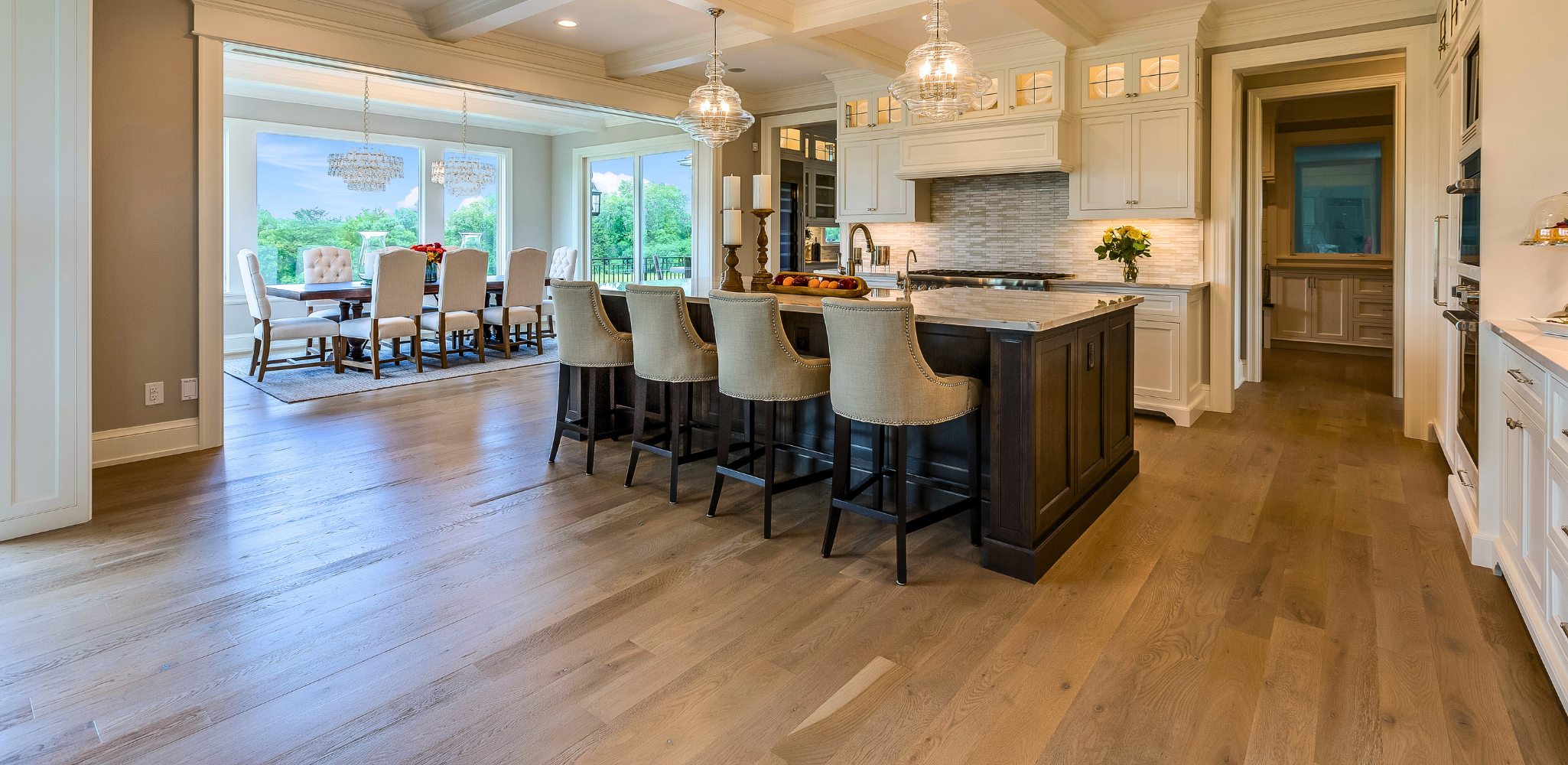
You’ve decided it’s finally time to rip out the old flooring and put in hardwood. Then you discover there are two main options—solid and engineered—and suddenly the project feels a lot more complicated, especially when you factor in our coastal humidity, chilly winters, and the mix of slab and basement construction across Nassau County.
Let’s walk through how each type behaves in real Long Island homes so you can choose with confidence, room by room.
How Solid and Engineered Hardwood Are Built
Solid hardwood is exactly what it sounds like: each plank is milled from a single piece of wood, typically ¾" thick. It can usually be sanded and refinished multiple times over its life, which is why older capes and colonials often still have their original solid oak floors.
Engineered hardwood uses a real hardwood wear layer on top, supported by cross‑laminated wood layers underneath. That layered core is designed to limit movement when humidity and temperature change. On Long Island, where summer air is damp and winter heat dries everything out, that extra stability matters.
If you want to see how different wood species and constructions look together, you can compare options in our selection of solid and engineered hardwood planks.
Key idea: Solid is one thick piece of wood; engineered is real wood on top of a more stable core.
Long Island Climate: Where Each One Shines
Our environment is tough on wood floors. Coastal humidity, stormy weather, and winter salt all influence which type makes more sense in a given space.
In above‑grade, well‑controlled areas—like a living room on the main floor where humidity stays fairly consistent—solid hardwood can perform beautifully. It offers a classic feel underfoot and the option for future refinishing if styles or colors change.
Engineered products handle bigger swings in moisture better, which is why they’re often the smarter choice in:
- First floors over concrete slabs
- Rooms near exterior doors that see wet shoes and salt
- South Shore homes where ocean air and sand come in daily
If you’re weighing how wood species, finishes, and construction all respond to movement and moisture, our guide to hardwood flooring fundamentals breaks down those details in plain language.
Rule of thumb: The more moisture or temperature fluctuation a room sees, the more engineered hardwood deserves to be the front‑runner.
Room‑by‑Room Recommendations for Nassau County Homes
Most post‑war houses in areas like Levittown and nearby communities have a mix of original wood upstairs, concrete on the main level, and sometimes a partially finished basement. That layout naturally points to different choices by floor.
On the main level over a slab, engineered hardwood is typically safer than solid because it can be installed over concrete with less risk of cupping or gapping. In older homes where original solid planks are already in place on wood subfloors, keeping them and planning for professional sanding and refinishing down the road can be a great value.
For kids’ rooms and primary bedrooms on an upper floor, either construction can work if the home has decent humidity control. Families often lean toward engineered there as well, especially in wider planks, because the added stability helps minimize seasonal gaps.
If your existing solid floors are scratched but structurally sound, our team can help you decide whether to replace them or explore hardwood refinishing options to bring them back to life.
Takeaway: Think of solid hardwood as a long‑term asset where conditions are mild, and engineered as the workhorse where the house or climate are more demanding.
Installation, Maintenance, and Budget Considerations
Solid hardwood is almost always nailed or stapled to a wood subfloor. That limits where it can go and adds prep work if you’re dealing with concrete. Engineered floors give you more flexibility: many can be glued down, floated, or stapled, which is a big advantage in split‑levels and raised ranches with a mix of subfloor types.
Whichever route you choose, a careful install is crucial. Gaps, squeaks, and premature wear usually trace back to shortcuts during prep or installation, not the product itself. Our expert residential flooring installation team focuses on proper moisture testing, subfloor prep, and acclimation so your investment performs the way it should.
Maintenance is similar for both: routine sweeping to keep sand and grit from scratching, quick wipe‑ups of spills, and reasonable humidity control. Engineered options with tough factory finishes can offer a bit more forgiveness in busy entryways or kitchens, while solid’s advantage is the ability to be sanded and stained again years later.
If you’re still torn between the warmth of real wood and the practicality of waterproof materials for a basement or mudroom, it can help to compare those spaces with today’s waterproof flooring collections, which often pair well with hardwood elsewhere in the home.
Choosing between engineered and solid hardwood doesn’t have to be stressful. When we look at how you and your family actually live—pets, kids, beach days, and all—we can match each room with the construction that fits it best. If you’d like a local expert to walk your home, answer questions, and build a plan around your budget, you can request a free in‑home flooring estimate to get started.


