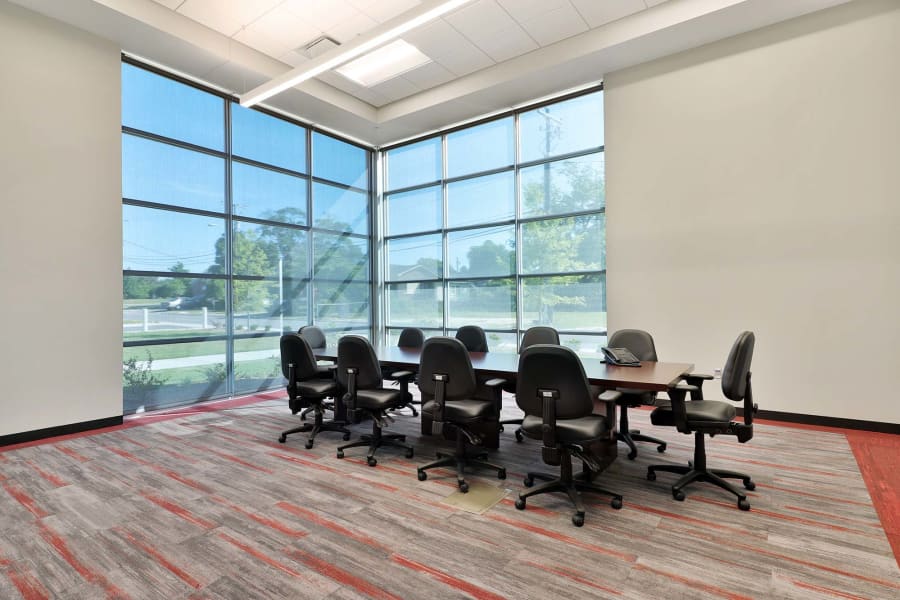
About Carpet Tile: The Long Island Buyer's Guide
Carpet tile gives you the warmth and quiet of carpet in a format built for real life: squares and planks that go down piece by piece, stand up to heavy traffic, and let you swap out one stained tile instead of replacing a whole room. For Long Island homes, where so much living happens in finished basements, playrooms, and home offices, that combination is hard to beat.
Our carpet tile collection is built around commercial-grade lines, the same class of product specified for offices and schools, and that toughness is exactly what a hardworking lower level needs. Whether you're finishing a basement in Levittown or setting up a quiet workspace in Lake Grove, carpet tile deserves a spot on your shortlist. When you'd like a professional opinion on your space, request a free estimate and one of our project specialists will help you plan it.
What Is Carpet Tile?
Carpet tile, also called modular carpet or carpet squares, is carpet manufactured in individual pieces instead of wide rolls. Each tile has three working parts: the face yarn you see and feel, a primary backing that yarn is tufted into, and a heavy, dimensionally stable secondary backing that keeps the tile flat, square, and in place.
That built-in backing is the real difference. Wall-to-wall carpet depends on a separate pad, tack strip, and stretching to stay tight. Carpet tile carries its own structure, so it lies flat on its own and can be lifted and replaced without disturbing its neighbors. Tiles typically go down over a releasable adhesive or small adhesive tabs at the corners, which is a big part of why they suit concrete slabs so well.
Most carpet tiles are squares, commonly around 24 inches on a side, and many collections also come as long planks that can be laid in brick, ashlar, or herringbone patterns. You'll find both squares and planks in our collection, which gives you more design freedom than a roll of broadloom ever could.
Request more info
Why Carpet Tile Works So Well in Long Island Homes
Long Island's housing stock makes a strong case for carpet tile. Capes, ranches, high ranches, and split-levels across Nassau and Suffolk counties often have a basement or lower level with a concrete floor: a space that runs cool, can pick up humidity in summer, and gets used hard as a family room, playroom, gym, or guest suite. Carpet tile brings warmth and sound absorption to that slab without the headaches of stretching broadloom over pad in a room that may someday see water.
Getting the floor into the house matters, too. A full-width roll of broadloom has to make it down a narrow basement stairwell and around a tight landing, while boxes of carpet tile carry down easily. Tiles are also simple to cut around lally columns, closets, and built-in shelving, with less waste than piecing broadloom around the same obstacles.
Near the water in Oceanside and Wantagh, sand, salt, and damp shoes find their way indoors in every season. A low, tight carpet tile gives up grit to the vacuum more readily than plush carpet, and a tile that gets stained near the back door can simply be pulled and replaced. In Brooklyn, Queens, and the Bronx, where our Shop at Home service brings samples right to your front door, carpet tile is a natural fit for basement apartments, rentals, and home offices where a damaged section needs a quick fix instead of a full tear-out.
Are Carpet Tiles Good for Basements?
Yes. Carpet tile is one of the best ways to carpet a basement, as long as the slab stays reasonably dry. Because each tile is a separate piece with a synthetic backing, a spill or minor leak affects only the tiles it touches. You can lift them, dry the floor, and set them back down, or replace the few that didn't survive, instead of tearing out a whole room of soaked carpet and pad.
Be clear-eyed about the limit, though: carpet tile is water-tolerant, not waterproof. The fibers absorb water like any carpet, and chronic dampness can lead to odors under any soft floor. Have the slab checked for moisture and sort out gutter, grading, or sump problems before any new floor goes down. Our practical guide to waterproof-friendly floors for families, rentals, and basements lays out when luxury vinyl gives you more peace of mind and when carpet tile gives you the warmth you're after.
A few habits make a basement carpet tile floor last:
- Buy extra tiles. Set aside a few spares from the same production run so a replacement matches the rest of the floor years from now.
- Control humidity. A dehumidifier through humid Long Island summers protects the floor and everything else you keep downstairs.
- Zone the room. Keep carpet tile out of the laundry corner and away from the water heater and sump pit, where a hard surface makes more sense.
Commercial Carpet Tiles at Home: What Commercial-Grade Means
Commercial carpet tile is engineered for rolling office chairs, constant foot traffic, and years of daily cleaning, conditions far harsher than most homes will ever see. It's usually a dense, low-profile loop or patterned construction over a stiff, stable backing, and those are the constructions our collection is built around.
In a house, that grade translates into a floor that shrugs off toy bins, treadmill traffic, and desk chairs without matting down. The trade-off is feel. Commercial carpet tile is firmer and flatter than the plush carpet you'd choose for a bedroom. If sinking your toes into the floor is the goal, wall-to-wall carpet over a quality pad is still the right call. If durability, easy cleanup, and a tailored look matter more, commercial-grade carpet tile wins.
Reading Carpet Tile Specs Like a Pro
Spec sheets look technical, but a handful of details tell you most of what you need to know:
- Construction: Loop pile, made of uncut loops of yarn, is the workhorse of carpet tile because it resists crushing and fuzzing. Patterned loop varies loop height or color to add texture and hide soil.
- Face weight: the ounces of yarn per square yard. More yarn generally means more to wear through, but face weight only tells half the story.
- Density: how tightly that yarn is packed. A dense, low tile often outperforms a heavier, looser one, because tightly packed loops support each other under traffic.
- Fiber: nylon is the most common fiber in commercial carpet tile thanks to its resilience. Solution-dyed fibers, with color built into the fiber as it's made, hold up well against fading and bleach spots.
- Backing: hard-backed tiles stay flat and stable on concrete, while cushion-backed tiles add comfort and extra sound absorption underfoot.
- Certifications: if indoor air quality matters to you, look for CRI Green Label Plus on the product's documentation.
The same principles that make any carpet durable apply here. Our article on choosing carpet for high-traffic areas explains why nylon fiber and loop pile hold up best in the parts of the house your family walks most.
Carpet Tile vs. Wall-to-Wall Carpet vs. Luxury Vinyl
Most shoppers weigh carpet tile against broadloom for comfort and against luxury vinyl for basements.
Carpet Tile vs. Wall-to-Wall Carpet
Broadloom still wins for plush comfort and a seamless look in bedrooms and living rooms. Over a good cushion pad, the benefits of wall-to-wall carpet, from warmth and softness to noise reduction, are hard to match. Carpet tile wins on durability, replaceability, and slab-friendly installation. Tile seams are part of the look, so in a main living space choose a textured or patterned style that disguises them.
Carpet Tile vs. Luxury Vinyl
Luxury vinyl is waterproof, easy to mop, and handles pets and spills without a second thought, which makes it the top pick for basements that see water, laundry areas, and kitchens. Carpet tile is warmer, quieter, and far more comfortable for sitting on the floor. Many families split the difference, with vinyl near the laundry and bulkhead door and carpet tile in the TV and play zone. If you're leaning toward a hard surface, see how luxury vinyl is built and why its wear layer decides how well it holds up.
Brands and Styles in Our Carpet Tile Collection
Our carpet tile comes from two commercial lines: Pentz, the commercial brand of Engineered Floors, and Philadelphia Commercial, a Shaw brand. Both lines are designed for demanding commercial spaces, and you'll find their styles in both square and plank formats.
For a floor with personality, browse our patterned carpet tile styles. Pattern does practical work, too: it breaks up the grid of seams and hides everyday soil between vacuumings.
Layout changes the look as much as the style does:
- Monolithic: every tile faces the same direction for the most seamless, broadloom-like appearance.
- Quarter-turn: each tile is rotated 90 degrees from its neighbor, creating a subtle checkerboard that hides seams well.
- Ashlar or brick: offset rows that soften the grid and suit long, narrow rooms.
- Herringbone: planks set in a zigzag for a custom, high-design floor.
Where Carpet Tile Works Best, Room by Room
The best rooms for carpet tile are the ones that work hard, get messy, and often sit on concrete:
- Basement family and media rooms: warmth on a cool slab, better acoustics for movie nights, and tile-by-tile repairs if something spills.
- Playrooms: soft enough for floor play, tough enough for toy bins and ride-on toys, and forgiving when juice hits the floor.
- Home offices: dense loop tiles let a desk chair roll and quiet the room for calls. Our look at flooring for home offices covers what reads polished on video calls and when luxury vinyl is the better fit.
- Home gyms: a firm, dense tile gives you grip for floor work; add rubber mats under heavy weights and machines.
- Rentals and basement apartments: damaged tiles can be replaced between tenants without redoing the whole unit.
Skip carpet tile in bathrooms, laundry rooms, kitchens, and entries that collect standing water. Stairs are a poor fit too, because tiles aren't made to wrap stair nosings, so they're usually finished in broadloom in a coordinating color.
What Affects the Cost of Carpet Tile
Carpet tile pricing depends on the product and the project as much as the square footage. These are the factors that move the number:
- Product grade: face weight, density, fiber, and backing type.
- Layout: patterned installs, quarter-turn layouts, and herringbone planks need more cutting and a larger overage.
- Subfloor prep: patching and leveling a slab, or addressing moisture, before tiles go down.
- Removal: tearing out and hauling away old carpet, pad, and tack strip.
- Edges and transitions: wherever carpet tile meets vinyl, tile, or hardwood it needs the right strip, and our explainer on the different kinds of carpet transitions shows the reducers, T-moldings, and end caps involved.
- Spares: extra tiles from the same run for future replacements.
Because you replace sections instead of whole rooms, carpet tile's long-term cost often compares well with broadloom in hardworking spaces. We also offer financing options that can help you spread out the cost of your project.
Carpet Tile Installation and Care
Installation is forgiving compared with many floors, but the finished result still comes down to preparation and layout. The slab or subfloor has to be clean, flat, and dry. The room is squared off from center lines so the cut tiles at each wall come out even. Tiles go down over adhesive with their arrows oriented to the chosen layout, and doorways are finished with the right transitions.
When our installers handle the job, it follows our residential flooring installation process: an in-home consultation, a customized flooring plan and detailed quote, prep work that can include moving furniture and addressing existing flooring issues, the installation itself, and a final walkthrough and clean-up, all backed by our satisfaction guarantee.
Handy homeowners do install carpet tile themselves, and it's a reasonable project in a simple rectangular room. A professional install earns its keep in rooms with columns, closets, and several doorways, on slabs that need leveling, and in patterned or herringbone layouts where one crooked row shows across the entire floor.
Day to day, carpet tile asks very little of you:
- Vacuum often. Lifting grit before it grinds into the fibers is the single best thing you can do for any carpet.
- Blot spills fast. Use a clean white cloth and a carpet-safe cleaner, and avoid soaking the tile.
- Swap, don't suffer. Lift a stained or damaged tile and press in a spare with its arrow matching its neighbors.
- Rotate for even wear. Trade tiles from a low-traffic corner with tiles from a worn path to keep the floor looking uniform.
Carpet Tile FAQs
Can you put carpet tiles on concrete?
Yes, concrete is one of the best surfaces for carpet tile. The slab needs to be clean, flat, and dry, with cracks and low spots patched first. Most commercial tiles go down over a releasable adhesive, so they stay put underfoot but can be lifted later without damaging the slab.
Do carpet tiles need padding?
No, carpet tiles don't use a separate pad. The backing is built into each tile, and cushion-backed styles add softness directly to the tile itself. A loose pad underneath would let the tiles shift and the seams open up.
How long does carpet tile last?
A quality commercial carpet tile can last a decade or more in a home, where traffic is a fraction of what an office sees. Density, fiber, and regular vacuuming decide most of that lifespan. Because worn or damaged tiles can be replaced one at a time, the floor as a whole can stay in service longer than wall-to-wall carpet that has to be replaced all at once.
Can you replace a single carpet tile?
Yes, and it's the biggest advantage carpet tile has. Lift the damaged tile out of the releasable adhesive and press a new one into place with its arrow facing the same way as the tiles around it. Keep a few spares from your original order, since tiles from a later production run can differ slightly in color.
Are carpet tiles waterproof?
No, carpet tiles are water-tolerant rather than waterproof. Their synthetic backings won't rot, and wet tiles can be lifted, dried, or replaced, but the fibers absorb water like any carpet. For rooms that flood or stay damp, luxury vinyl is the better choice.
Where can I find carpet tiles near me?
Stop by any of our Long Island showrooms in Levittown, Oceanside, Wantagh, Lake Grove, and Patchogue, where our staff can walk you through carpet tile options. Find the showroom closest to you for hours and directions. If you're in Brooklyn, Queens, or the Bronx, our Shop at Home service brings the samples to you.

See Carpet Tile at Carpet Depot
Carpet Depot began in 1991 as a single carpet store and is still family owned and operated. Bring your room measurements and a few photos to any of our showrooms, or let us bring samples to your door, and we'll help you match the right tile, backing, and layout to the way you use the room. When you're ready, book your free flooring estimate and start planning a carpet tile floor that looks good and works hard for years.
Request more infoReimagine your space
Get inspired with our beautiful flooring galleries