

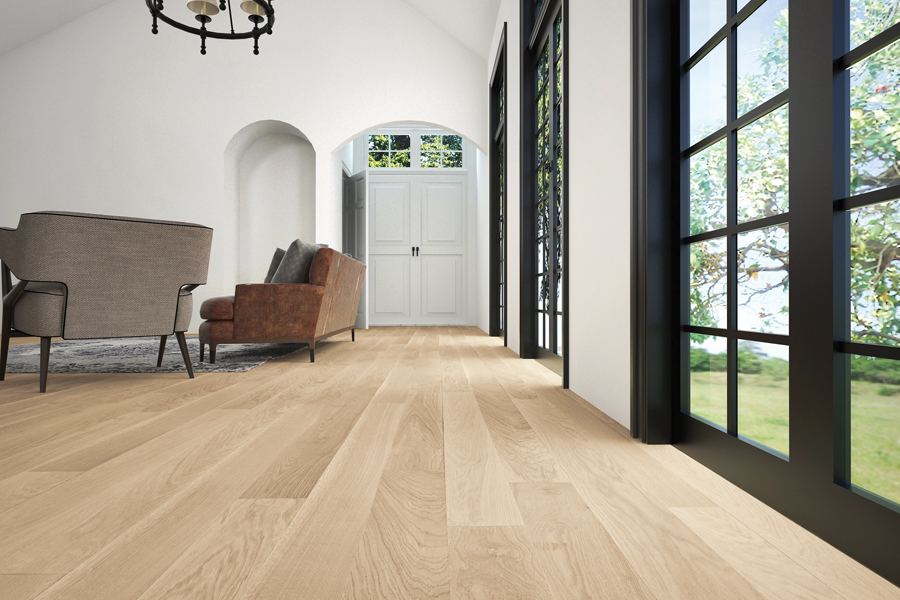
In many Levittown homes, the living room has to do a lot with a modest footprint. It is where muddy shoes land in winter, where sunlight shifts across one main window, and where older builder-grade floors can make the whole space feel darker than it really is. The good news is that color underfoot changes the room faster than most people expect.
Start with the light already in the room
Small rooms rarely need a stark white floor. What they usually need is a surface that reflects light softly instead of absorbing it. In a living room with limited natural light, warm beiges, gentle taupes, and light greige tones tend to feel bigger and calmer than deep brown or busy high-contrast patterns.
That is one reason many homeowners begin by comparing lighter textures in our carpet selection. A soft, low-contrast carpet can blur the visual edges of the floor, which makes the room feel less chopped up. It also helps older furniture, wood trim, and wall colors work together instead of competing for attention.
Texture matters as much as color
A bright floor is not always a pale floor. Texture changes how color reads from morning to evening. A plush surface can look richer and slightly darker because it absorbs more shadow, while a loop or pattern often shows more variation across the day.
For small living rooms, we often steer people toward fibers that stay cleaner-looking between deep cleanings and bounce back from traffic. Nylon carpet fibers are especially practical if you want a lighter shade but worry about daily wear. That matters in real households, where a beautiful sample has to survive pets, guests, and the path from the sofa to the front door.
If you like a little texture without making the room feel busy, a subtle loop can help. Many berber carpet styles have a flecked look that hides specks and footprints better than a flat, solid surface. In a compact room, that balance of brightness and forgiveness is often more useful than chasing the palest color in the store.
If you want the room to feel wider, keep contrast low
One common mistake is pairing dark flooring with light walls in a room that is already short on square footage. Strong contrast can draw a hard line across the floor plane, which makes the boundaries feel more obvious. A closer color relationship between the floor, walls, and upholstery usually creates a smoother visual sweep.
This is where some families compare carpet with waterproof luxury vinyl, especially if the living room opens into an entry or a space that sees tracked-in sand and wet shoes. A light oak-look plank can brighten the room while giving you a more continuous look into nearby areas. In homes near Oceanside, that easier cleanup can matter just as much as appearance.
Samples at home tell the truth
Showroom lighting is helpful, but it is never the same as your own lamp light, window direction, and wall color. A tone that seems airy under bright displays can turn yellow, gray, or flat once it is sitting in your living room. That is why we like to slow the decision down and look at samples where you actually live.
Our Shop-at-Home service makes that comparison much easier because you can see how each color behaves at noon, at dusk, and next to the furniture you are keeping. In smaller rooms, those subtle shifts are not minor details. They are often the difference between a floor that opens the space up and one that makes it feel boxed in.
A bright living room usually comes from the right mix of softness, undertone, and realism about how your household uses the space. If you want help narrowing down colors that will work in your home, you can start with a free flooring estimate.


