

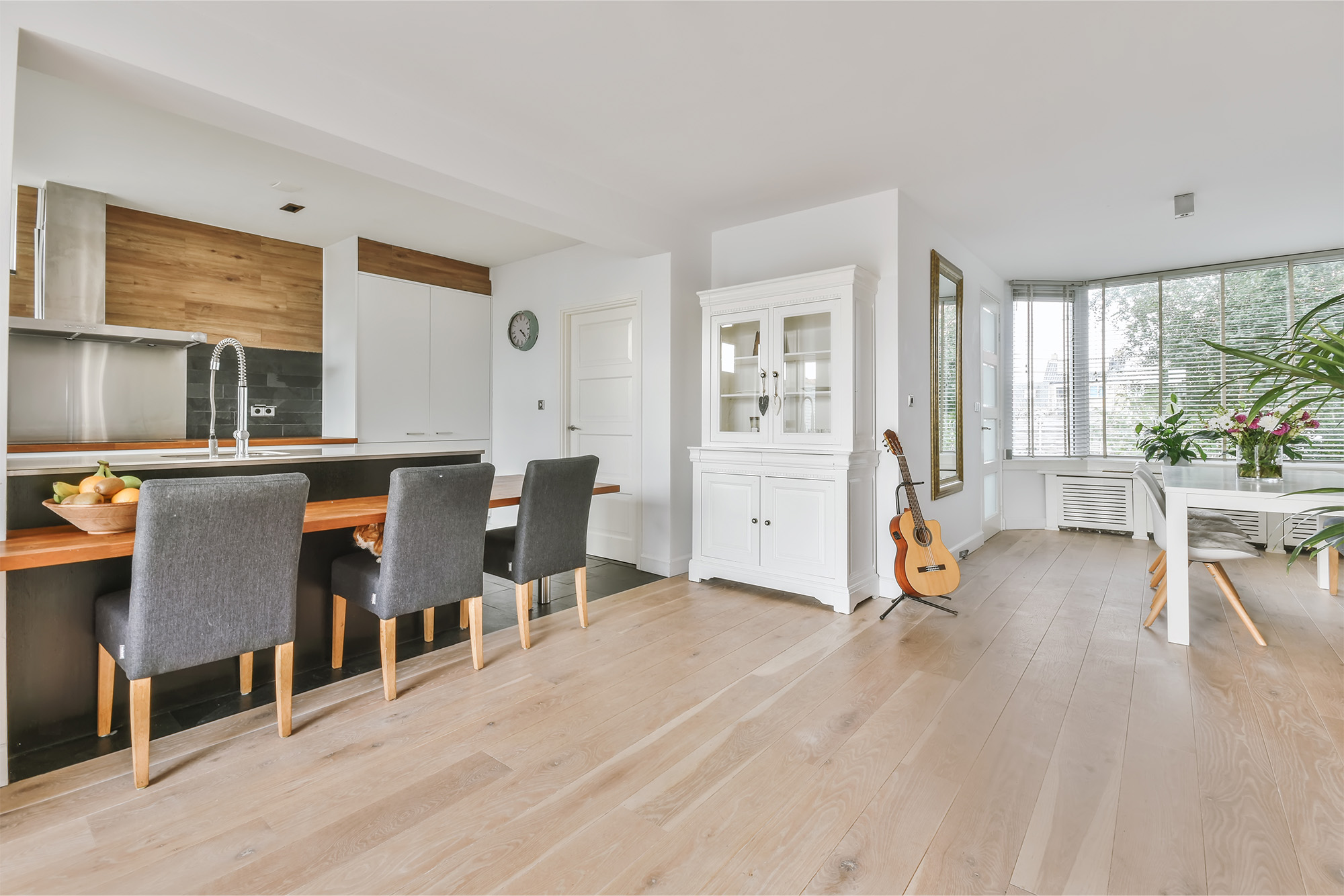
A busy kitchen floor has to put up with a lot. In an older Levittown ranch, that might mean chair legs scraping across the breakfast nook, a dog racing in from the yard, and the usual trail of drips between the sink and dishwasher. In real life, the right floor is not the one that looks perfect for a week. It is the one that still looks good after dropped ice cubes, dragged grocery bags, and years of family traffic.
Why luxury vinyl plank works so well in kitchens
For most kitchens, luxury vinyl plank earns its keep by solving the two problems that show up first: moisture and surface wear. A well-made plank has a durable top layer, a printed design layer, and a stable core that handles everyday splashes far better than traditional wood. That matters in homes where spills sit for a few minutes before anyone gets to them.
The other advantage is comfort. Compared with tile, it feels warmer and a little more forgiving underfoot, which you notice during long stretches of cooking. If you want to compare current visuals, widths, and wood-look options, our luxury vinyl selection is a practical place to start.
Scratches come down to construction, not just color
A darker floor can hide some crumbs, but it will not automatically hide wear. What protects a kitchen surface is the build quality, especially the wear layer and the overall rigidity of the plank. In a house with kids, pets, and stools that get pulled in and out all day, those details matter more than a trendy finish name.
That is why we usually tell homeowners to look past the display label and focus on how the product is made. Waterproof cores help with routine kitchen messes, and stronger top layers help the floor resist the scuffs that come from daily movement. If you want a clearer breakdown of those features, our luxury vinyl buying guide explains what actually affects durability.
Where hardwood still makes sense
Some homeowners still prefer the warmth and character of real wood, especially if the kitchen opens directly into surrounding rooms with existing oak. Hardwood can absolutely work, but it asks more from you. Standing water, pet bowls, and repeated wet mopping are harder on natural wood than they are on resilient flooring.
That does not mean wood is off the table. It means the space has to be used honestly. In a lower-risk kitchen with careful habits, engineered hardwood options deserve a look because their layered construction is more dimensionally stable than solid planks. If you are comparing aesthetics across rooms, browsing our hardwood collection can help you decide how much real wood matters in the overall design.
The best choice depends on how your kitchen really gets used
In many Nassau County homes, the kitchen is the main traffic lane, homework station, and drop zone all at once. That is why we like to start with habits instead of headlines. Do you cook every night? Do wet boots or sandy shoes pass through nearby? Are you more bothered by visible scratches or by the stress of babying the floor?
Those answers usually point people in the right direction fast. If you want to see samples under your own lighting and next to your cabinets, our Shop-at-Home consultation makes the decision much easier, especially when undertones look different in the showroom than they do in your kitchen.
If you are ready to sort through kitchen flooring with real-life durability in mind, you can schedule a free flooring estimate and we will help you narrow it down to options that fit your home.


