

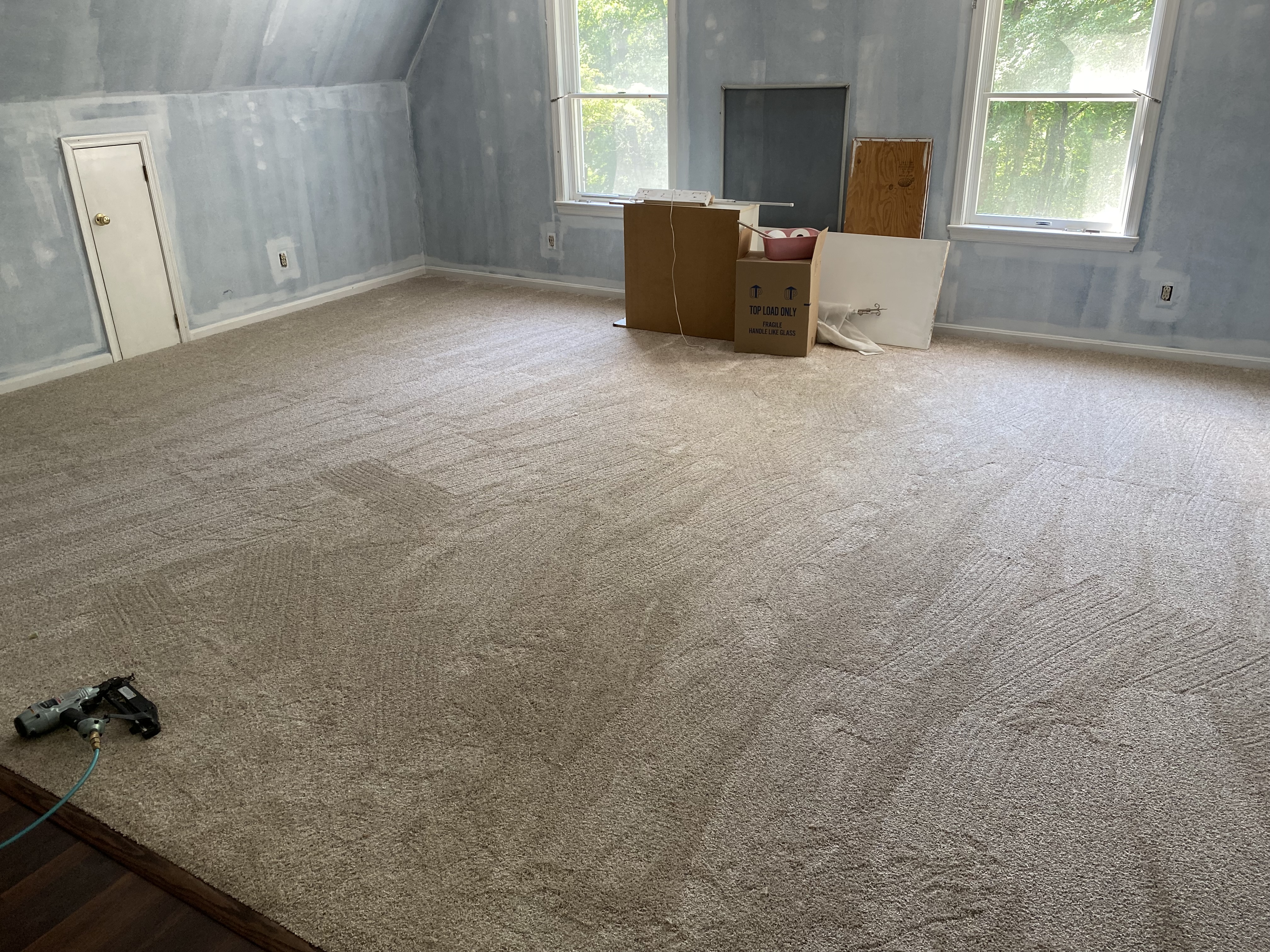
In a Levittown Cape, the upstairs often sits right over the spaces where real life happens: the TV room, the kitchen table, the front hall. That is why footfall noise matters so much. If you are redoing a second floor, the question usually is not just what looks best. It is what keeps steps, dropped toys, and early-morning traffic from echoing through the house.
Why upstairs noise gets amplified
Older Capes tend to have lighter framing and less insulation between levels than many newer homes. Add a hard surface upstairs, and impact sound can travel fast through the structure. That is different from airborne sound like voices or music. With floors, the bigger complaint is usually the thud of heels, the rattle of a toy rolling, or the quick rhythm of kids running from bedroom to bathroom.
This is where material choice changes the feel of the whole house. Broadly speaking, our carpet catalog gives you the softest surface and the most natural sound absorption, while our luxury vinyl selection gives you a firmer, easier-cleaning floor with very different acoustic behavior. Neither is automatically right. It depends on what kind of noise bothers you most and how you use the rooms.
Carpet still wins for the quietest feel
If your main goal is reducing upstairs noise, carpet has the edge. The face fiber, cushion, and softer surface work together to absorb impact before it turns into vibration below. That is why bedrooms, playrooms, and second-floor halls often feel calmer with carpet, especially in homes where one person's schedule starts earlier than everyone else's.
Construction matters, though. Dense, resilient nylon carpet fibers tend to hold texture better in high-traffic paths than softer options that crush more easily over time. A quality cushion underneath also matters as much as the carpet itself. If you want to understand how pile, density, and fiber affect both comfort and wear, our carpet buying guidance helps break down what actually makes a floor quieter and longer-lasting.
Where LVP makes sense upstairs
Luxury vinyl plank is popular upstairs for a reason. It handles spills, pet accidents, and everyday cleanup better than most soft surfaces, and it gives you a wood-look floor without the seasonal movement you would worry about more with solid hardwood on Long Island. In busy households, that practicality is hard to ignore.
The tradeoff is sound. LVP is harder underfoot, so it reflects more impact noise unless the product has a substantial attached pad or is paired with the right underlayment. Some waterproof luxury vinyl options do a better job softening sound than older, thinner constructions, but they still usually will not hush footsteps the way carpet does. If you love the look of plank for bedrooms or an upstairs landing, the smarter question is not "Is LVP quiet?" but "Is this specific build quiet enough for our household?"
The best answer is often room by room
Many upstairs remodels work best with a split approach. Carpet in bedrooms cuts down on step noise where people sleep, while LVP in a hall, loft, or kids' study area gives you easier maintenance where traffic is heavier. That balance is especially useful in homes with pets, teenagers, or a mix of work-from-home and school schedules.
Seeing samples at home helps more than looking at a tiny display under showroom lighting. During a free Shop-at-Home visit, we can compare softness, plank thickness, and color in your actual upstairs rooms, with your stair noise and subfloor conditions in mind. In many cases, the best pick is the one that sounds and feels right in your house, not just the one that looks best on a board.
If you are planning an upstairs update and want help comparing quieter carpet with practical plank, you can start with a free flooring estimate.


